
Introduction
Influence of Social Media on Teenagers: The Good, The Bad, and The Balance
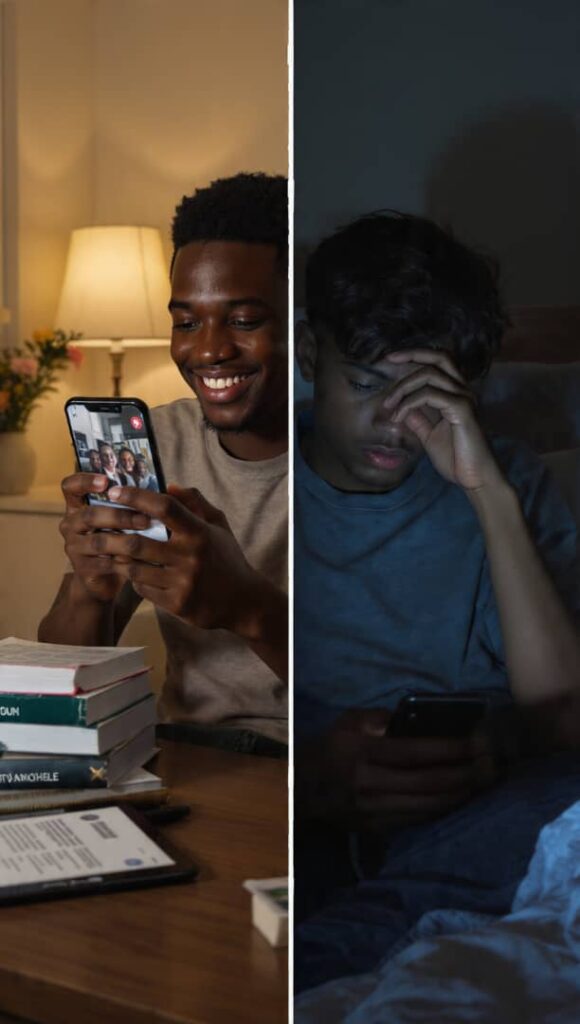
Influence of Social Media on Teenagers is a topic every parent, teacher, and teen needs to understand today. Why? Because social media now sits right in the middle of teenage life. Apps like Instagram, TikTok, and Facebook help teens chat, learn, and share their world. But like any powerful tool, it comes with wins and risks.
The Good Side: How Social Media Helps
1. It keeps teens connected
Distance no longer breaks friendships. Teens can text, call, or video-chat with friends and family anywhere. Plus, they build new relationships with people who share their interests.
2. It opens doors to learning
Beyond memes and dances, social media gives teens free access to tutorials, study groups, news, and educational pages. Students now join online communities where they ask questions and get answers fast. That’s real learning power.
3. It boosts creativity and voice
Many teens use platforms to show their talents music, art, writing, coding, comedy. Influence of Social Media on Teenagers here is positive because it builds confidence. When teens create and post, they learn to express ideas and own their voice.
4. It creates awareness
Teens learn about real-world issues, cultures, and causes. Social media pushes them to join movements, volunteer, and care about things bigger than themselves.
The Bad Side: Where Teens Struggle
1. It steals time and sleep
Too much scrolling cuts into study time and rest. When teens stay online late, they feel tired, distracted, and less productive the next day.
2. It opens the door to cyberbullying
Sadly, some teens face online insults, threats, or mean comments. This can hurt their confidence and emotional health quickly.
3. It pressures mental health
Constant comparison is a trap. Teens see “perfect” lives and start doubting their own. Chasing likes and comments adds stress. That’s a heavy Influence of Social Media on Teenagers we can’t ignore.
4. It exposes harmful content
Not everything online suits teenagers. Some posts spread false news, violence, or age-inappropriate material. Without guidance, teens may see things that confuse or harm them.
Conclusion: Balance + Guidance Wins
Influence of Social Media on Teenagers has both bright and dark sides. When teens use it wisely, social media supports learning, connection, and growth. But careless or endless use damages grades, mental health, and real-life relationships.
The solution isn’t banning phones. The solution is balance. Teens must learn digital habits. Parents, teachers, and guardians must guide, not just restrict. Talk about screen time, privacy, and online kindness. Set healthy limits together.
Remember this: Social media should serve teens, not control them. When we teach responsibility early, we raise a generation that uses technology to build, not to break.