Introduction
Understanding Adolescence: Morphological Changes in the Girl Child
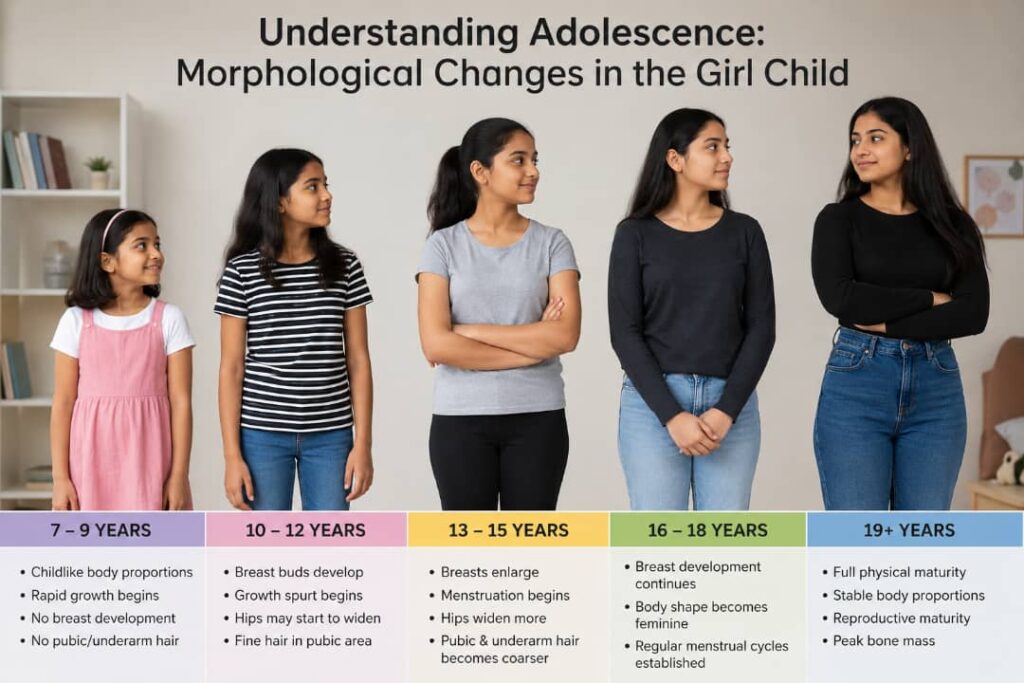
Adolescence is a big stage of life. It’s the bridge between childhood and adulthood, usually from age 10 to 19. During this time, a girl’s body and mind change fast. These changes happen because of hormones from the endocrine system, especially estrogen and progesterone. We call the visible physical changes morphological changes in the girl child meaning changes in the body’s form and structure. Let’s break it down in simple terms.
1. What Starts These Changes
At the start of puberty, the brain’s hypothalamus sends a signal to the pituitary gland. The pituitary then tells the ovaries to wake up and start producing estrogen. Estrogen is the main hormone behind female physical development. This whole process is puberty, and it sets off the *morphological changes in the girl child* you can see and feel.
2. Key Changes You’ll Notice
A. Growth in Height and Weight
Between ages 10 and 14, most girls hit a growth spurt. Bones get longer, muscles develop, and weight increases as the body stores fat in specific areas. That’s why girls often grow taller than boys in early adolescence.
B. Breast Development
One of the first signs is the appearance of breast buds. Estrogen stimulates breast tissue and fat, making the chest area develop gradually.
C. Wider Hips and Pelvis
Estrogen also widens the pelvis and broadens the hips. This gives the female body its shape and prepares it for childbearing later on.
D. Body Hair Growth
Hair starts growing in the pubic area and under the arms. Small amounts of androgens, which are male hormones, cause this.
E. Skin and Body Shape Changes
Skin can get oilier because the body produces more sebum. This sometimes leads to acne. Fat also shifts to the thighs, hips, and breasts, making the body look curvier.
F. Menstruation Begins
Menarche, or the first period, usually starts 2 to 3 years after breast development. It shows that the reproductive system is maturing.
3. How These Changes Affect Girls
Physical effects: The body becomes more mature and ready for reproduction. But rapid growth can cause clumsiness and aches for a while.
Psychological effects: Many girls feel excited, confused, or self-conscious. Body image and self-esteem can go up and down during this time.
Social effects: Friends, family, and society start treating girls differently as they grow older.
4. Why Support Matters
These changes feel overwhelming without the right help. Girls need clear information, guidance, and emotional support. Parents, teachers, and health workers can:
– Teach factual lessons about puberty and hygiene.
– Encourage good food and exercise to support healthy growth.
– Create a safe space where girls can ask questions without feeling ashamed.
Conclusion
The morphological changes in the girl child are natural and necessary. They mark the shift from childhood to womanhood. When girls understand what’s happening, they accept their bodies, stay healthy, and build confidence. With the right education and support, adolescence becomes a time of growth and strength, not fear or embarrassment.